
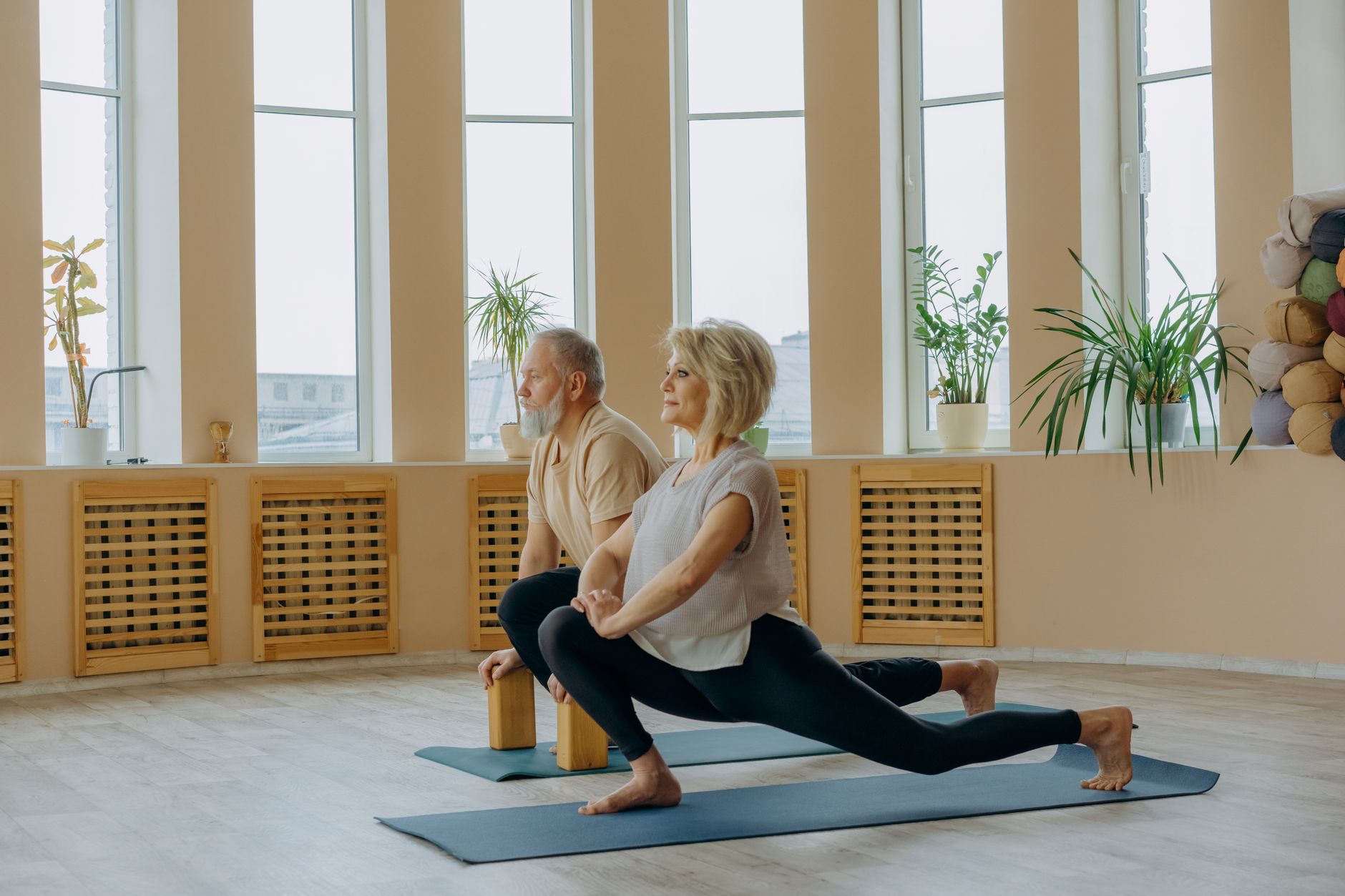
Flexibility is not a test of how far you can reach. It is the ability to move comfortably through the ranges your daily life asks of you. A mindful yoga practice can help you explore those ranges gradually, notice areas of tension, and build confidence in movement. Start with simple poses, steady breathing, and a clear rule: mild stretching is acceptable, but sharp pain or strain means it is time to ease back.
Set a Comfortable Baseline
Before you begin, notice how your body feels in ordinary movements such as reaching overhead, turning your torso, or bending your knees. You do not need to measure or compare your range. This quick check simply gives you a starting point and can help you choose poses that feel appropriate today.
Warm up with a few minutes of easy movement, such as walking in place, shoulder rolls, or gentle cat-cow on hands and knees. Warm muscles often move more comfortably than muscles asked to stretch while still. If you have an injury, ongoing pain, or a health condition that affects movement, ask a qualified health professional how to adapt your practice.
Choose Gentle, Useful Poses
Try movements that match everyday tasks. A supported low lunge can gently explore the front of the hips; a seated figure-four position can offer a mild stretch around the outer hip; and a standing side reach can introduce comfortable movement through the sides of the body. Use a chair, wall, folded blanket, or block to reduce strain and make each position feel steady.
Move into each pose only until you notice a mild, manageable stretch. Keep breathing naturally, and avoid bouncing or pulling yourself deeper. Hold for a few slow breaths, then come out gradually. A pose should not cause sharp pain, numbness, tingling, or a feeling that a joint is being forced.
Use Breath to Guide Range
Let your breathing stay smooth and unstrained. If you find yourself holding your breath, clenching your jaw, or bracing hard, make the pose easier. You might bend your knees, shorten your stance, place your hands higher, or use support. These adjustments are not shortcuts; they help you practice with control.
Stay attentive to changes from one breath to the next. Your body may soften slightly, stay much the same, or feel tighter on a given day. Do not treat any of those responses as a reason to push. Back out if discomfort increases, and allow your range to vary with energy, stress, sleep, and other day-to-day factors.
Build a Sustainable Routine
Begin with a short practice you can repeat comfortably, such as a few gentle poses several times a week. Regularity matters more than intensity: repeating controlled movements gives you opportunities to become familiar with your range without turning every session into a test. Leave time to stand or sit quietly afterward and notice how your body feels.
Keep a simple note of which movements felt comfortable and which needed more support. Use that information to adjust your next practice, not to chase a deeper stretch. Progress may show up as easier daily movement or greater comfort in a pose, rather than a dramatic increase in range. At Stillwater Yoga in San Diego, ask an instructor about modifications that fit your experience and needs.
A practical flexibility practice starts with attention, support, and patience. Choose gentle movements, breathe steadily, and let comfort—not the shape of a pose—set your range. With a consistent approach, yoga can become a useful way to explore mobility while respecting your body’s signals. If you would like guidance getting started, consider asking a local yoga instructor about beginner-friendly options.